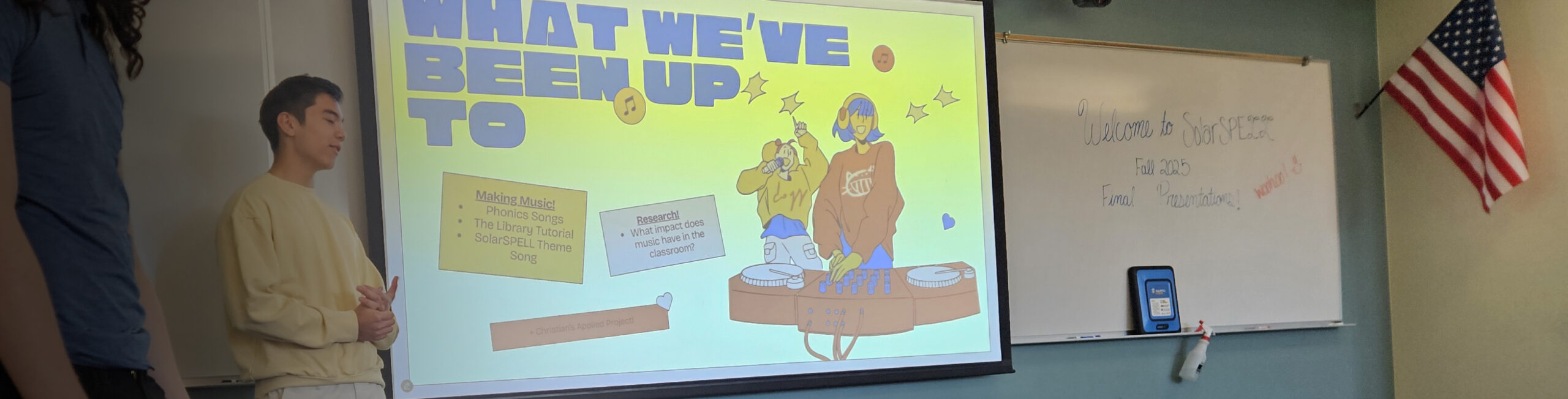
By Alexander Santiago, Music Production Intern, Fall 2025
When I first applied for the SolarSPELL Musician position, I had absolutely no idea what to expect. It simply stated that they wanted a “music production intern.” I’ve long been interested in music and music production, so I submitted an application. I wasn’t sure what kind of music I’d be working with or even if I would be making music, but I was excited to learn more about music production and grow my skills as a musician.
During the first meeting, I quickly found that I would get to make my own music and have a lot of creative control over it. I was incredibly excited to hear this and to learn a ton about music production through making songs with SolarSPELL. However, it was also kind of a scary task. When asked to “make songs,” where do you go from there?
The first step was identifying subjects that would be useful in the SolarSPELL library. I was asked to potentially make a song about phonics, and I also looked through the library itself and tried to figure out what would be valuable to have communicated through song. In the end, I decided on digital literacy, science and sustainability.
Getting the topics was the easy part. Now, how do I figure out what I’m supposed to make? What does a “phonics song” sound like? In order to answer this, I found myself doing something that I would never have expected to be doing as a college student: watching tons and tons of children’s educational songs and videos. It was a ton of fun revisiting old favorites from my childhood: Schoolhouse Rock, Flocabulary, and the endless amount of educational music on YouTube. Additionally, I was provided with a few songs already made for SolarSPELL, one being the SolarSPELL theme song that had a fun, children’s music vibe to it, and another one made by SUNO AI based off of church music, which is a popular genre in the communities SolarSPELL serves.
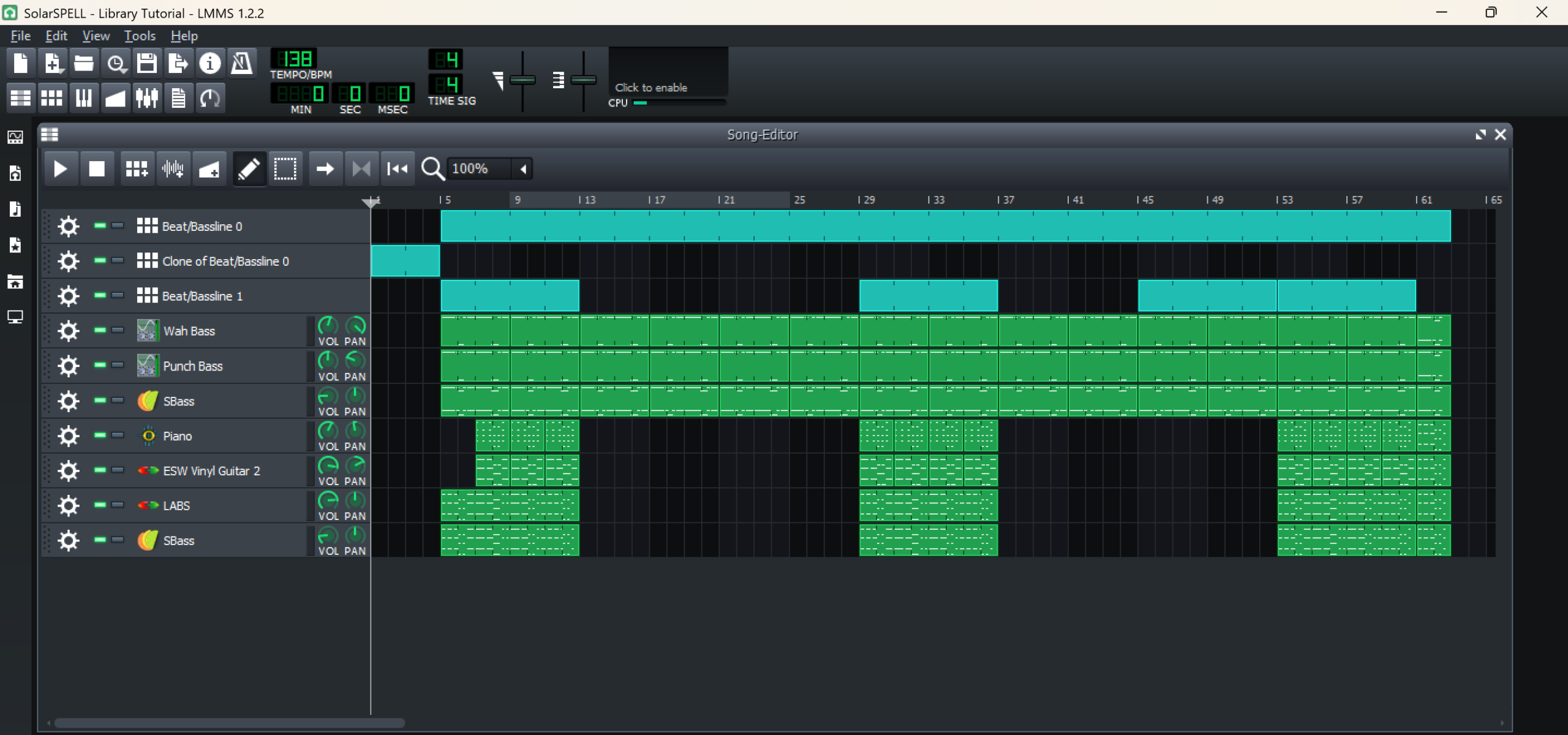
In the end, I decided on and created rough drafts for four songs: Sound It Out!, a phonics song based off of the songs by Flocabulary (educational hip hop and rap); Let’s Experiment, a science song for encouraging the experiments in the library to be used based off of Schoolhouse Rock songs; It’s Our World, a sustainability song based on church music; and The Library Tutorial, a digital literacy song outlining how to use the SolarSPELL Library that continued the general children’s music vibe of the SolarSPELL Theme Song.
As I continued to polish and finalize these songs, the music team had the opportunity to connect with some of the Peace Corps volunteers who use the SolarSPELL library, and I got some very valuable insights on my music.
First, I was told that the phonics song was very well received by volunteers in Vanuatu. It was made abundantly clear to me that phonics was an essential subject, and I was also told that the volunteers asked if more phonics songs were on the way. However, in its current version, it was way too fast. Students who were still learning English, especially the younger students the song was created for, would have a hard time keeping up with the pace of a hip hop song.
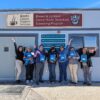
Not only that, we also received something from this meeting that actually blew my mind: photos of students in Lesotho learning the SolarSPELL theme song. It was incredibly inspiring seeing the work the team had done having an impact, but also made me immediately realize that the music I was currently working on would be used as well. It made me reflect on what was really important in my work: I wanted the songs that I made to be useful in the library and not just a colorful add-on. I needed to understand the needs of my audience and deliver something that would actually have an impact.
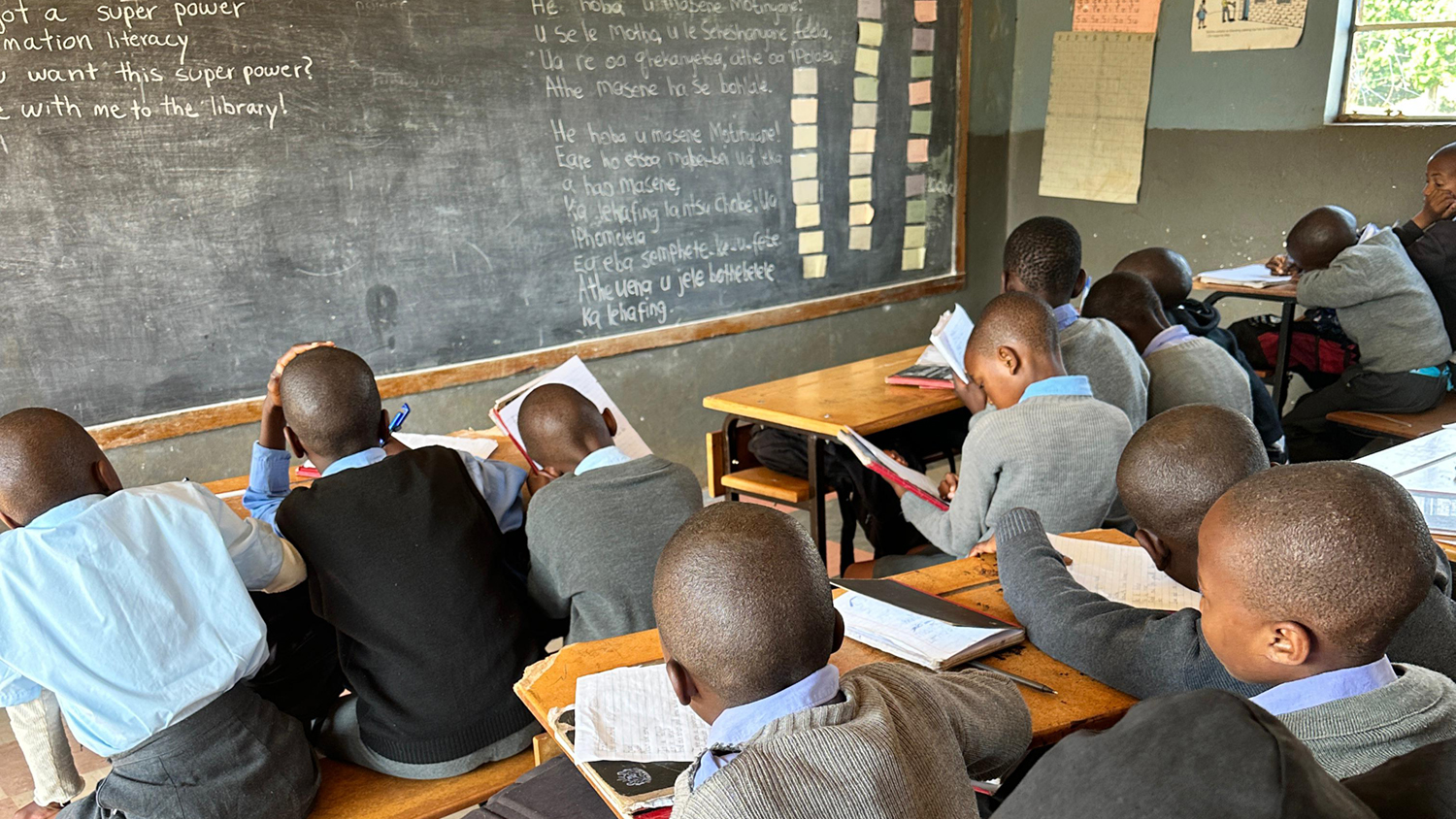
Photo courtesy of Kinsey
After the meeting, I thought about what I should make and finalize in the second half of the semester. In the end, I decided to keep the Library Tutorial and Sound it Out!, and to scrap the sustainability and science songs. I didn’t really see a world where the latter two would actually be used, and it would be a lot more impactful if I used that space to create more phonics songs.
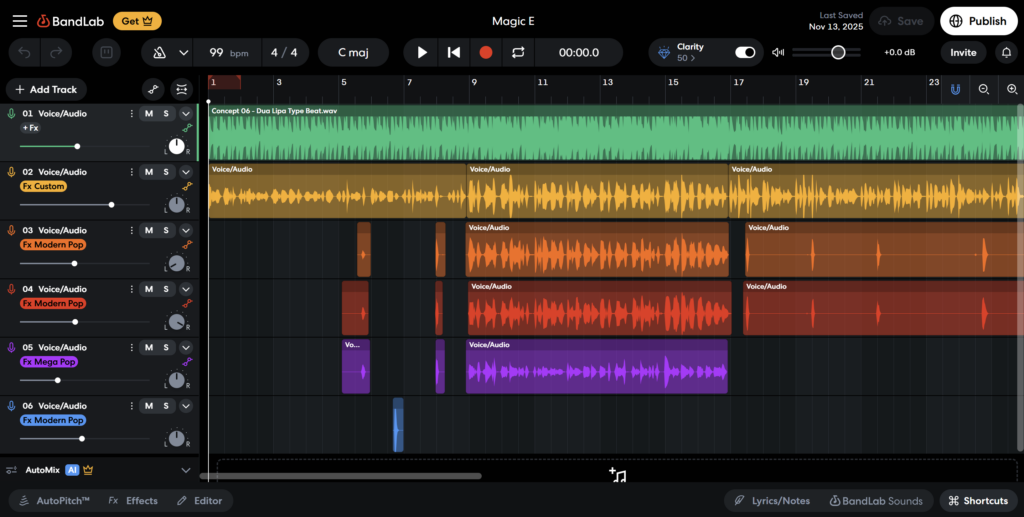
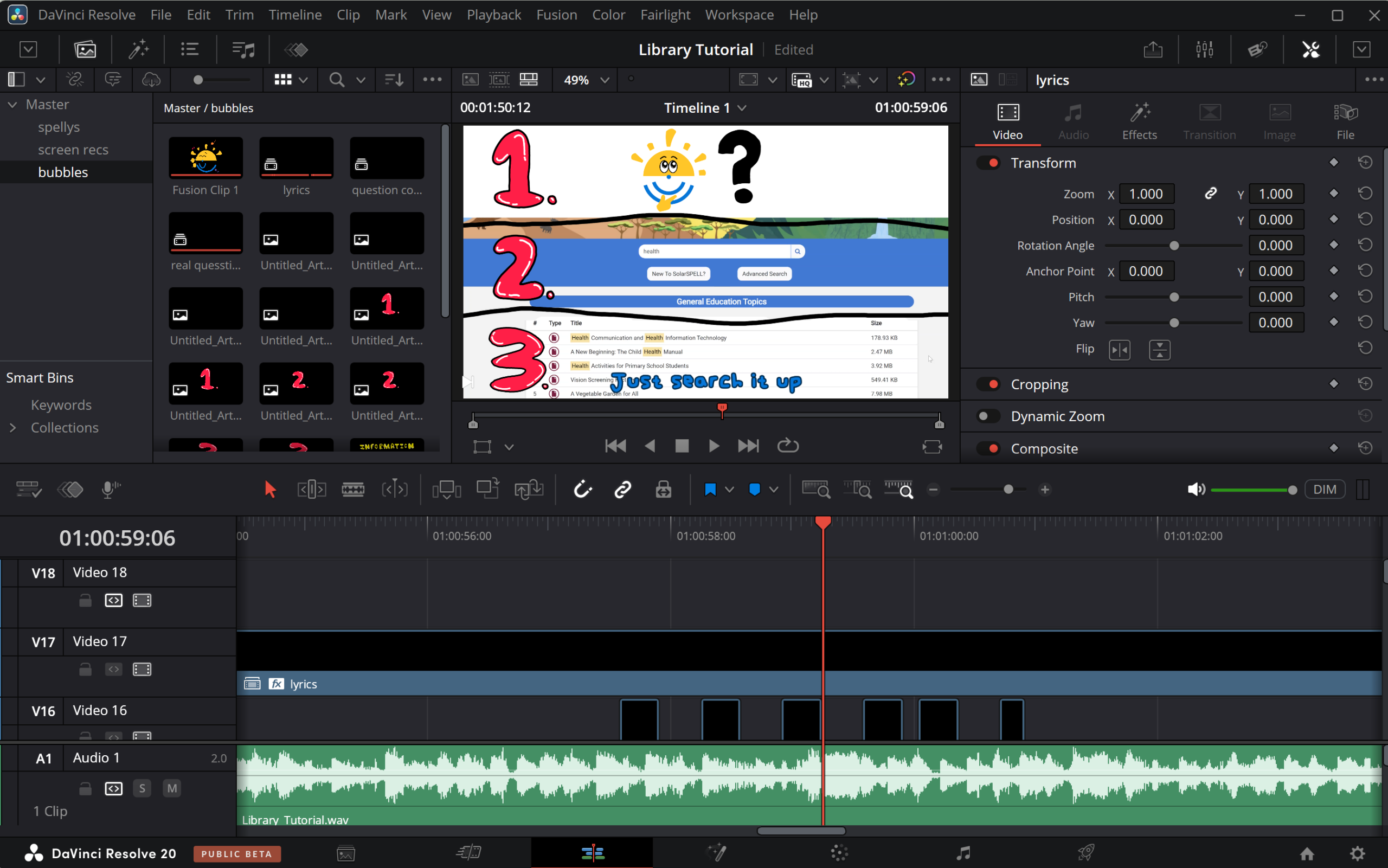
I went ahead and made two more phonics songs, one called Magic E (about adding an “e” to the end of a word) and Let’s Blend Together (about “blended” sounds, such as “bl” and “st”). I also made videos for The Library Tutorial, Sound It Out! and the SolarSPELL theme song, which was made the previous semester.
At the end of the semester, our team received a music video for the SolarSPELL theme song, sung and performed by the kids in one of the classrooms in Lesotho, which was the coolest thing I got to see all semester. It was incredibly exciting to think about the music I made this semester being used in the future once it’s put in the library. I hope to continue making music in the future, whether educational for SolarSPELL or my own personal projects, and I hope that that music reaches other people and continues to have an impact.
The ASU SolarSPELL Initiative empowers offline communities globally by providing localized libraries and building the 21st century skills that people need to make informed decisions, increase their self-reliance and improve their quality of life. To get involved, visit https://solarspell.org/student-opportunities.